
Scoliosis can cause a number of effects as the body’s overall symmetry can be disrupted. As the body’s central structural anchor, the spine’s alignment is key to maintaining healthy body posture and alignment. A spine and body that’s off-balance can wear unevenly over time.
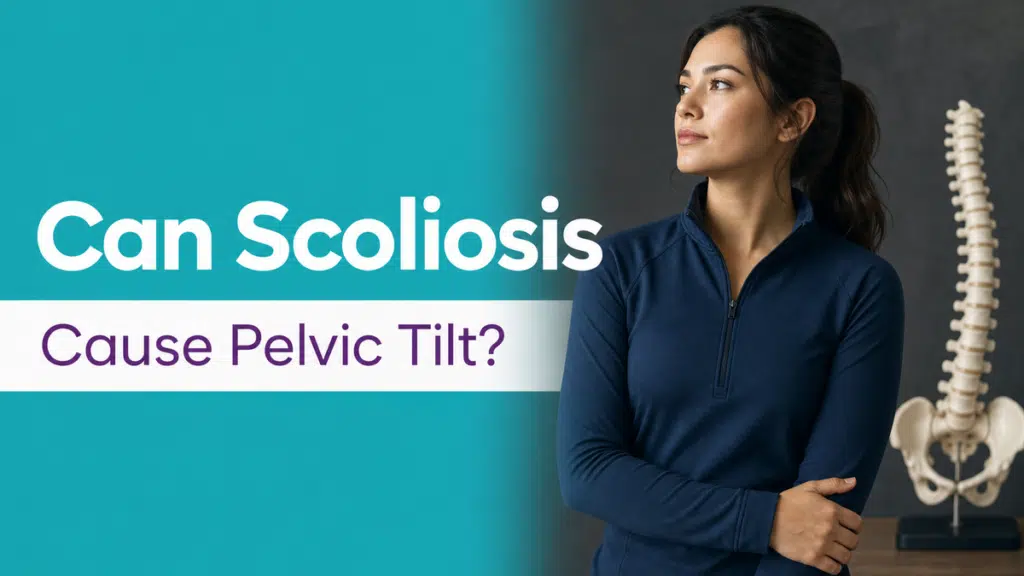
Scoliosis is an asymmetrical spinal condition, and a primary effect is postural imbalance. Pelvic tilt is a common effect of scoliosis as the spine attaches directly to the pelvis, and if the spine curves and rotates unnaturally, its uneven pressure can cause the pelvis to tilt unevenly.
Scoliosis can disrupt the position of the pelvis in different ways, and as the pelvis is key to lower body stability and movement, pelvic tilt can have a number of effects.
What is Pelvic Tilt?
If the pelvis tilts too far forward (anterior pelvic tilt) or backward (posterior pelvic tilt), the spine’s foundation is affected, and conditions that affect the lower spine, such as lumbar scoliosis, can also cause postural changes that disrupt pelvic alignment.
An anterior pelvic tilt occurs when the front of the pelvis lower while the back lifts, and can be linked with weak glutes and tight hip flexors, and a posterior tilt involves the front of the pelvis tilting upward while the back drops down.
An anterior pelvic tilt can cause the lumbar spine to curve inward excessively, and a posterior pelvic tilt can cause the lower back to straighten out, flattening the curve.
A tilted pelvis causes uneven hips, and if the spine’s unhealthy alignment and rotation has caused the pelvis to tip out of alignment, in order to improve the structural pelvic tilt, the spine’s abnormal spinal curvature needs to be improved.
Pelvic Tilt Symptoms
A pelvic tilt can affect lower body movement, and the more posture is disrupted, the more unhealthy movement patterns develop, further contributing to the spine and body’s uneven wear, particularly during movement.
If the pelvis and/or hips are tilted unevenly, upper body weight can’t be evenly distributed over the lower body.
A pelvic tilt can cause a number of symptoms including lower back pain, hip pain, and tight and sore muscles surrounding the lumbar spine and pelvis.
Scoliosis and Pelvic Tilt
Scoliosis causes the spine to curve unnaturally to the side and rotate, and the spine’s healthy curves are key to its balance, stability, and function.
Scoliosis is also progressive, so its effects are likely to change over time, becoming more disruptive and noticeable.
Because the spine acts as the body’s central structural anchor, if it becomes unbalanced and unstable, a number of effects can develop.
The earliest signs of scoliosis in children are often uneven shoulders and uneven hips caused by the uneven forces of scoliosis disrupting the body’s overall symmetry.
When the spine’s abnormal curvature is pulling excessively on one side of the rib cage, it can cause a rib flare, and the spine’s unnatural curve and twist can do the same to the pelvis, pulling on one side and causing it to tilt unnaturally.
In adults, it’s most often pain that leads to a diagnosis; scoliosis becomes compressive once skeletal maturity is reached, and back, muscle, and nerve compression are primary causes of scoliosis pain.
Scoliosis can cause pelvic tilt in different ways: structural differences, muscular changes, and functional disruptions.
Structural Changes
Also known as pelvic obliquity, pelvic misalignment causes one hip to sit higher or lower than the other hip and is a structural imbalance.
As a structural spinal condition, scoliosis can disrupt the structural alignment of the pelvis. Scoliosis develops in any spinal section, and thoracolumbar and lumbar scoliosis are the most closely associated with pelvic tilt.
The lumbar spine attaches directly to the pelvis, so if the lower back is twisting and curving unnaturally, pelvic obliquity is common, and when scoliosis develops in the lower thoracic spine and the upper lumbar spine, pelvic tilt is also common.
Muscular Imbalance
Scoliosis doesn’t just affect the spine, but also its surroundings, including its surrounding muscles, and a common scoliosis effect is a muscular imbalance.
Muscles on one side of a scoliotic spine are working harder to counteract its unnatural position while muscles on the opposite side become weaker from lack of use.
If the muscles surrounding the pelvis become tight and unbalanced, they can pull the pelvis out of alignment.
Leg Length Discrepancy
Scoliosis causes the pelvis to tilt unnaturally, and this causes a functional leg length discrepancy where one leg appears shorter than the other.
Changes to gait are common, along with fatigue; it takes more energy to counteract the effects of an asymmetrical gait.
The more asymmetries there are in the body, the more uneven wear is likely occurring, and the cumulative effect over time can be the onset of degenerative changes in the spine.
Addressing a Pelvic tilt with Treatment
When it comes to restoring the spine and body’s symmetry, a proactive chiropractic centered treatment approach customizes plans for proven results.
Here at the Scoliosis Reduction Center®, treatment plans are shaped around key patient and scoliosis variables, symptoms, and treatment goals.,
A comprehensive assessment and scoliosis X-ray tells me exactly what’s happening in and around the spine and informs treatment plans.
It’s important that scoliosis is measured accurately so treatment plans can be drafted accordingly. A measurement known as Cobb angle determines condition severity, and it’s referred to throughout treatment as an indicator of treatment efficacy and/or progression.
Correcting the spine’s misalignment by restoring as much of its healthy curves as possible is a focus of treatment, as is improving core and back muscle balance and strength for optimal spinal support.
The only way to restore postural balance, including the pelvis, is to improve the spine’s balance and stability.
Scoliosis-Specific Chiropractic
Chiropractic adjustments and techniques can work towards improving the spine’s position by addressing areas of vertebral subluxation, and scoliosis-specific physical therapy and targeted exercise focuses on restoring the spine’s surrounding muscle balance and strength.
Physical therapy also improves posture so the spine’s optimal alignment is supported by the body’s alignment; spinal health and postural health are closely linked.
Corrective bracing complements scoliosis-specific exercise by maintaining the spine’s straight alignment and helps strengthen the connection between the brain and the body and spine’s healthier alignment.
Together, scoliosis-specific exercise, corrective bracing, and scoliosis-specific chiropractic work towards the common goal of improving the spine’s position and balance, along with improving spinal support and stability.
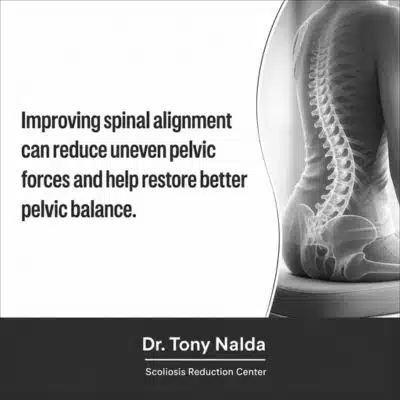
As the spine’s position is improved and the body’s balance is restored, the uneven forces pulling on the pelvis are reduced, and improvements to pelvic alignment are within reach.
Conclusion
Primary effects of scoliosis are postural changes including a pelvic tilt and uneven hips; uneven shoulders and hips are often the earliest signs of scoliosis in children, and in adults, it’s most often pain that leads to assessment and diagnosis.
A pelvic tilt is most closely associated with cases of thoracolumbar and lumbar scoliosis that involve the lower spine that attaches to the pelvis.
If the lumbar spine is curved and rotates unnaturally, it can disrupt the alignment of the pelvis, and a muscular imbalance caused by scoliosis can also contribute to a pelvic tilt developing due to a lack of support.
Scoliosis can also cause the appearance of a leg length discrepancy due to postural changes that include one hip sitting higher than the other.
It’s important that the uneven forces of scoliosis are addressed so uneven wear on the spine and body don’t have the cumulative effect of triggering degenerative changes in the spine.
Once the onset of spinal degeneration is initiated, it can be difficult to reverse, but restoring the spine’s alignment and body posture may be within reach through a proactive nonsurgical treatment plan.
If you are experiencing a pelvic tilt and haven’t been screened for scoliosis, don’t hesitate to reach out for assessment, diagnosis, and treatment; as a progressive condition, the sooner scoliosis is diagnosed and treated, the better.